How to Build a 5-Minute Morning Journaling Habit
Most morning routines fail because they ask too much. Wake up at 5am. Meditate for 20 minutes. Exercise. Journal for an hour. Cold plunge. Gratitude. Affirmations.
By day three, you're hitting snooze and feeling guilty about it.
Here's a different approach. One that actually sticks. Five minutes. A journal. That's it.
Step 1: Put the journal where you can't miss it
On your nightstand. On top of your phone. Next to the kettle. Wherever your hand goes first in the morning, that's where the journal lives.
Habit science calls this "reducing friction." The less you have to think about starting, the more likely you are to start. If the journal is in a drawer or on a bookshelf, it's already lost the battle against your phone.
Step 2: Write before you scroll
This is the most important rule. Before you check messages. Before you open any app. Before you absorb anyone else's thoughts, put your own on paper first.
Why? Because the first thing you consume in the morning sets the emotional tone for everything that follows. When you start with other people's news, opinions, and demands, your brain enters reactive mode. When you start with your own thoughts, you enter intentional mode.
Five minutes of writing before scrolling is worth more than an hour of journaling after you've already been hijacked by your inbox.
Step 3: Use a prompt if you need one
Don't overthink what to write. If words come easily, let them flow. If not, use a simple prompt:
- What's on my mind this morning?
- What would make today feel meaningful?
- What am I carrying that I can set down?
One question. One page. That's enough. The practice isn't about volume. It's about presence.
Step 4: Pair it with something you already do
Habit stacking works. Attach your journaling to an existing routine. Kettle on, journal open. Coffee brewing, pen moving. The existing habit becomes the trigger for the new one.
If you meditate in the morning, journal right after. Even two or three minutes of writing after a short meditation captures insights that would otherwise dissolve by the time you check your phone. Try putting on ambient or meditation music to create the space. A quiet soundtrack signals to your brain that this is a different kind of moment. Not a task. A practice.
Step 5: Protect the streak, not the length
Some mornings you'll write two pages. Some mornings you'll write two sentences. Both count. What matters is that you opened the journal. You showed up.
The Buddhist concept of "beginner's mind" applies here. Every morning, approach the page like it's your first time. No expectations. No pressure to be consistent in output. Just consistent in showing up.
If you miss a day, don't spiral. Open the journal the next morning and write: "I missed yesterday. I'm here now." That's the practice. Coming back.
Why five minutes is enough
There's a misconception that journaling needs to be a deep, extended practice to be useful. Research suggests otherwise. Brief, consistent writing has a greater impact on mental clarity and emotional regulation than occasional long sessions. The consistency matters more than the duration.
Five minutes a day, seven days a week, is 35 minutes of intentional self-reflection. That's more than most people give themselves in a month.
Start tomorrow morning
Tonight, put a journal and pen next to your bed. Tomorrow morning, before anything else, open it and write for five minutes. Don't plan what to say. Don't aim for something worth reading. Just move the pen.
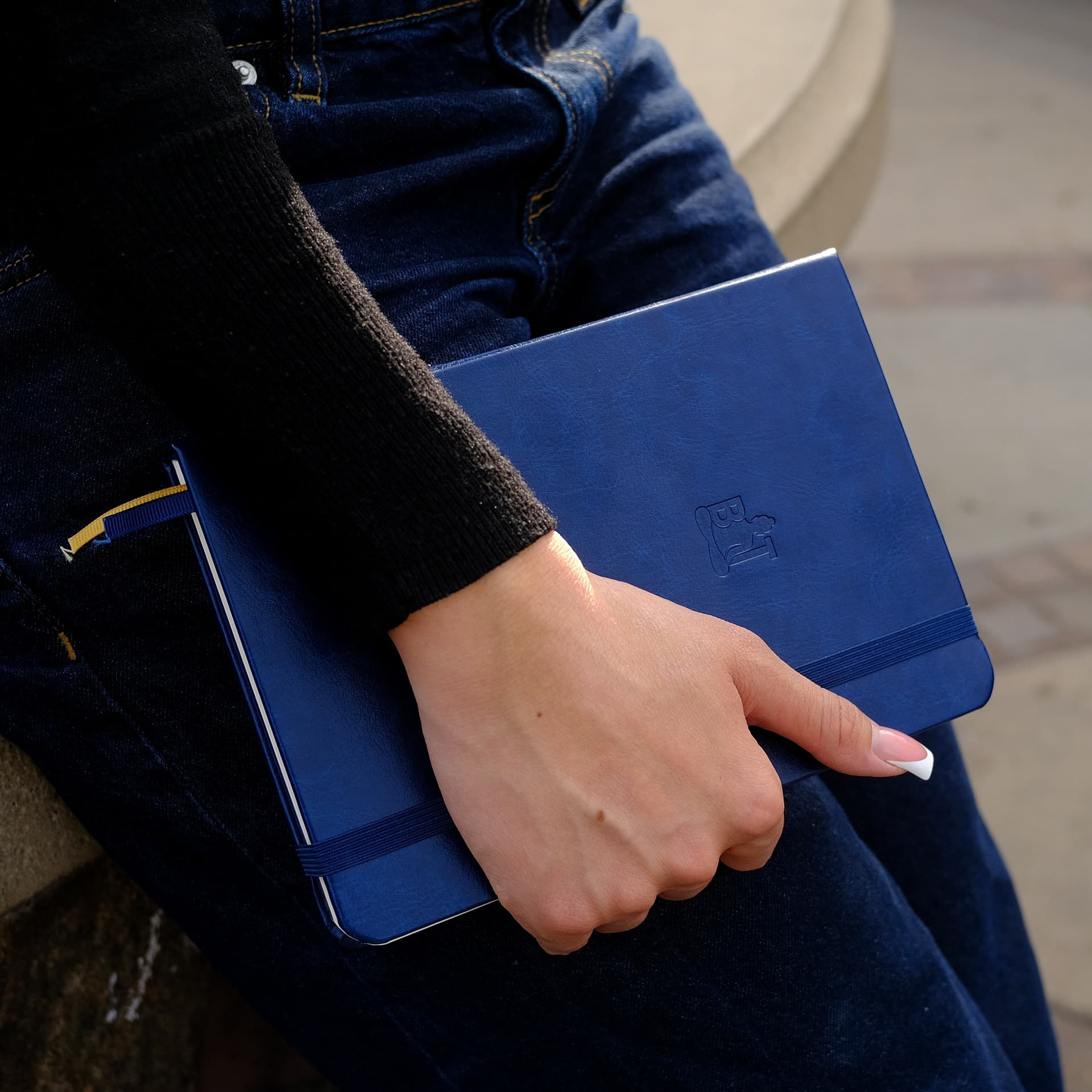
The Mindful Journal was designed for exactly this kind of practice. Lay-flat binding so it stays open on the nightstand. 50 built-in prompts for mornings when the words don't come easy. 120 GSM paper that feels right under any pen. It's a tool built for showing up, five minutes at a time.
Ready to start your practice?
The Mindful Journal gives you 224 pages, 50 guided prompts, and 120 GSM paper that makes every session feel intentional.
View the Journal