50 Journal Prompts for Self-Reflection
A good prompt does one job. It gives you a doorway. You do not have to know what you think before you start. You only have to start writing and see where the sentence goes.
Below are 50 prompts for self-reflection, grouped into five themes of ten. Some are quick. Some will keep you at the page for half an hour. Use them in any order.
How to use these prompts
You do not need to answer all fifty, and you do not need to answer them well. A few habits make the process easier.
- One prompt per sitting. Depth beats volume. Ten minutes with a single question usually teaches you more than a rushed list of ten.
- Set a timer. Five to ten minutes is plenty. When it ends, finish your sentence and stop.
- Do not edit as you go. Cross things out later, or never. The first honest sentence is often the useful one.
- Skip freely. If a prompt makes you roll your eyes, move on. If it makes you uncomfortable, that may be worth noticing, but you decide.
- Date your answers. In six months, it will be interesting to see how you would answer the same question again.
Part one: where you are right now
Start here if you have not written in a while. These prompts take a simple inventory of the present.
- What is taking up the most space in your mind today?
- Describe this season of your life in three words, then explain each one.
- What did you need this week that you did not get?
- What feels unfinished right now, and what would finished look like?
- When did you last feel fully present? What were you doing?
- What are you carrying that you could set down for a day?
- How does your body feel at this moment, from your head down to your feet?
- What is going well that you have not given yourself credit for?
- If today had a color and a kind of weather, what would they be?
- What are you pretending not to know?
Part two: what you value
Values are easy to claim and harder to describe. These prompts ask you to get specific.
- Which three values would you want a close friend to say guide your life?
- When did you last act against something you believe in? What happened?
- What do you spend time on that you would happily defend if someone questioned it?
- What would you do with a free day if no one needed anything from you?
- What do you admire in other people, and where does that quality show up in you?
- What does enough look like to you, in money, time, and attention?
- Which of your beliefs did you inherit and never examine?
- What would you refuse to compromise on, even at a cost?
- Describe a good day in specific detail, from waking up to going to sleep.
- What do you want to be known for, in a single sentence?
Part three: patterns and habits
Patterns are hard to see from inside them. Writing slows things down enough to notice.
- What do you do automatically when you feel stressed?
- At what time of day do you feel most like yourself, and what makes that hour different?
- Which small habit has had the biggest effect on your days?
- What do you keep putting off, and what story do you tell yourself about why?
- Which situations reliably bring out your impatience?
- What do you reach for when you are tired, bored, or avoiding something?
- Name a pattern that has repeated in your life over the last few years.
- If a stranger read your weekly routine, what would they guess your priorities are?
- What is one habit you would like to start, and what is the smallest possible version of it?
- What is one habit you would like to loosen, and what is it giving you right now?
Part four: the people around you
These prompts keep the focus on you: how you show up, what you notice, and what you want from the people in your life.
- Who makes you feel most at ease, and what do they do that creates that feeling?
- How do you tend to react when someone disagrees with you?
- What do you wish people understood about how you work or communicate?
- Who have you been meaning to thank, and what would you say?
- How do you show care for others, and how do you like to receive it?
- Is there a conversation you keep replaying? What is within your control now?
- Which relationships give you energy, and which ask a lot of it?
- What do you tend to hide from other people, and what does the hiding cost you?
- When did someone's kindness surprise you recently?
- What kind of friend, family member, or neighbor do you want to be?
Part five: looking ahead
Looking ahead is a chance to say what you want out loud, on paper, where no one can interrupt.
- What do you want more of next year?
- What would you try if you knew no one would judge it?
- Picture your life five years from now in small details: where you wake up, who is nearby, what the morning smells like.
- What decision have you been circling, and what would help you make it?
- Which skill would you like to be noticeably better at a year from now?
- What would you like to stop doing before this season ends?
- What would your future self thank you for starting today?
- What is one fear you would like to look at more directly?
- What would a gentler version of your current plans look like?
- Write a short note to yourself one year from today. What do you hope you can say you did?
Ways to work through the list
If fifty prompts feels like a lot, treat the list as a menu rather than an assignment.
- One a day. Fifty days, one prompt each. Cross them off on the page as you go.
- One theme a week. Pick a section and answer whichever three or four prompts catch your eye.
- By mood. Restless? Try the patterns section. Unsettled? Start with where you are now.
- Reread and compare. Answer the same prompt again after a few months and read the two versions side by side.
If you are still finding your footing, our complete guide to a mindfulness journal for beginners explains how to set up a simple routine around prompts like these. And when you sit down with nothing to say, these five easy prompts make a gentle warm-up.
Keeping your prompts close
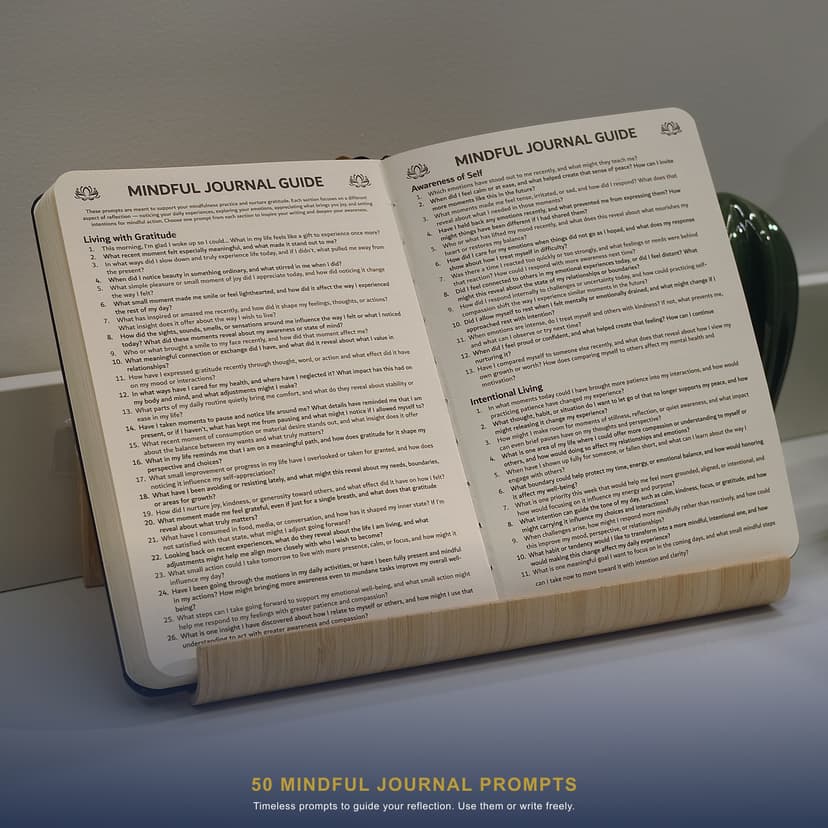
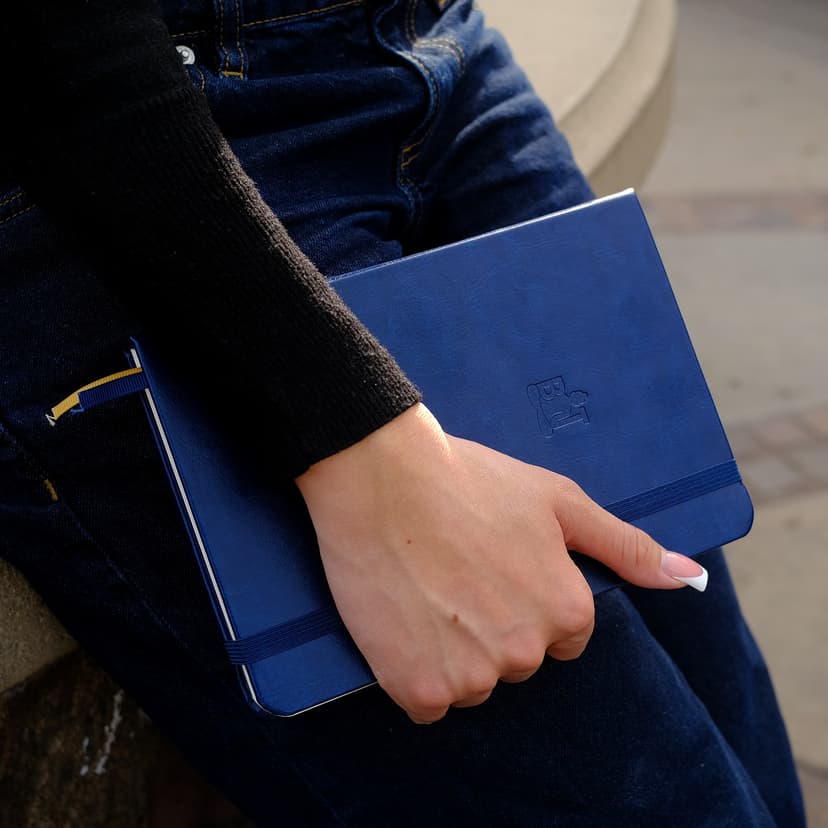
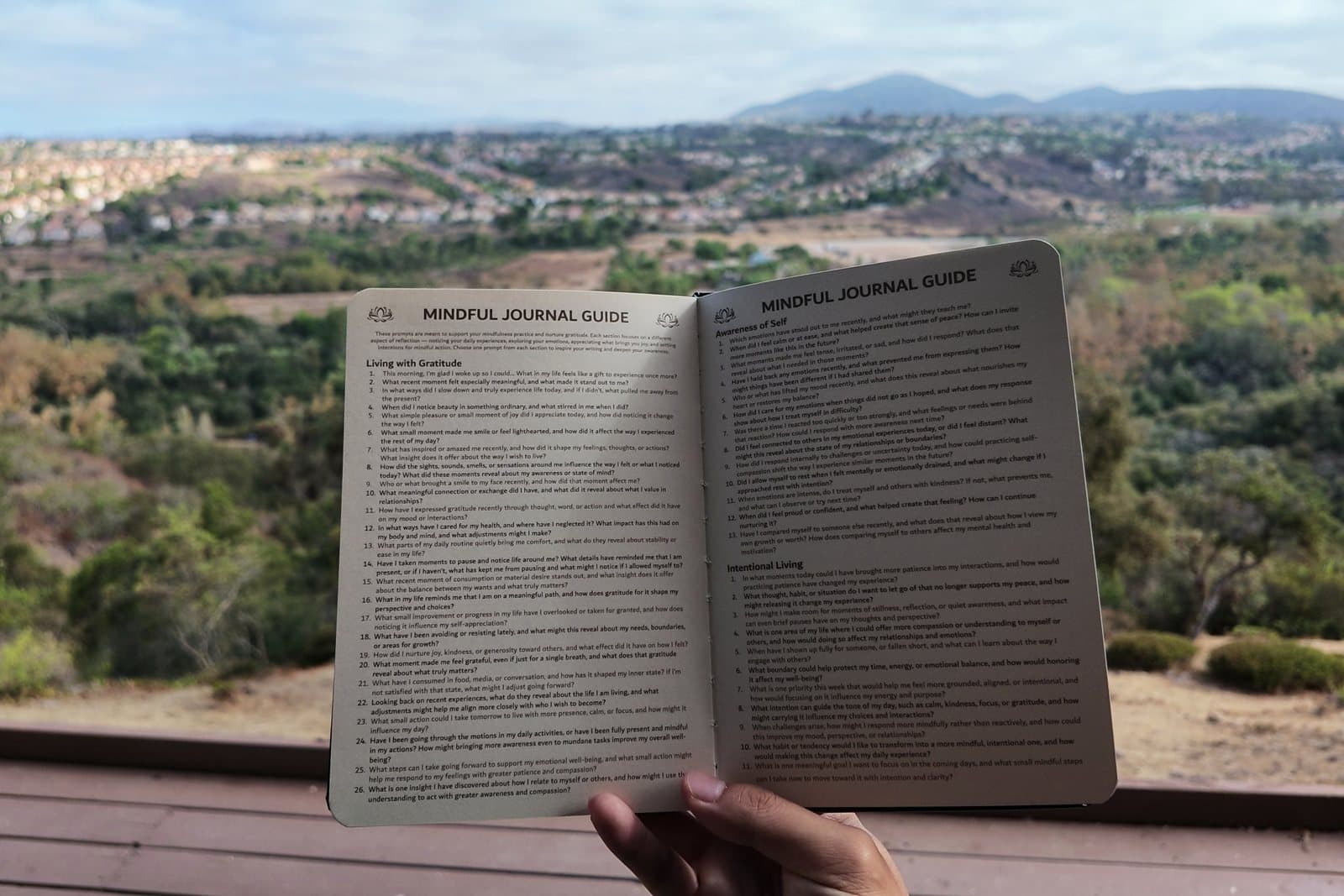
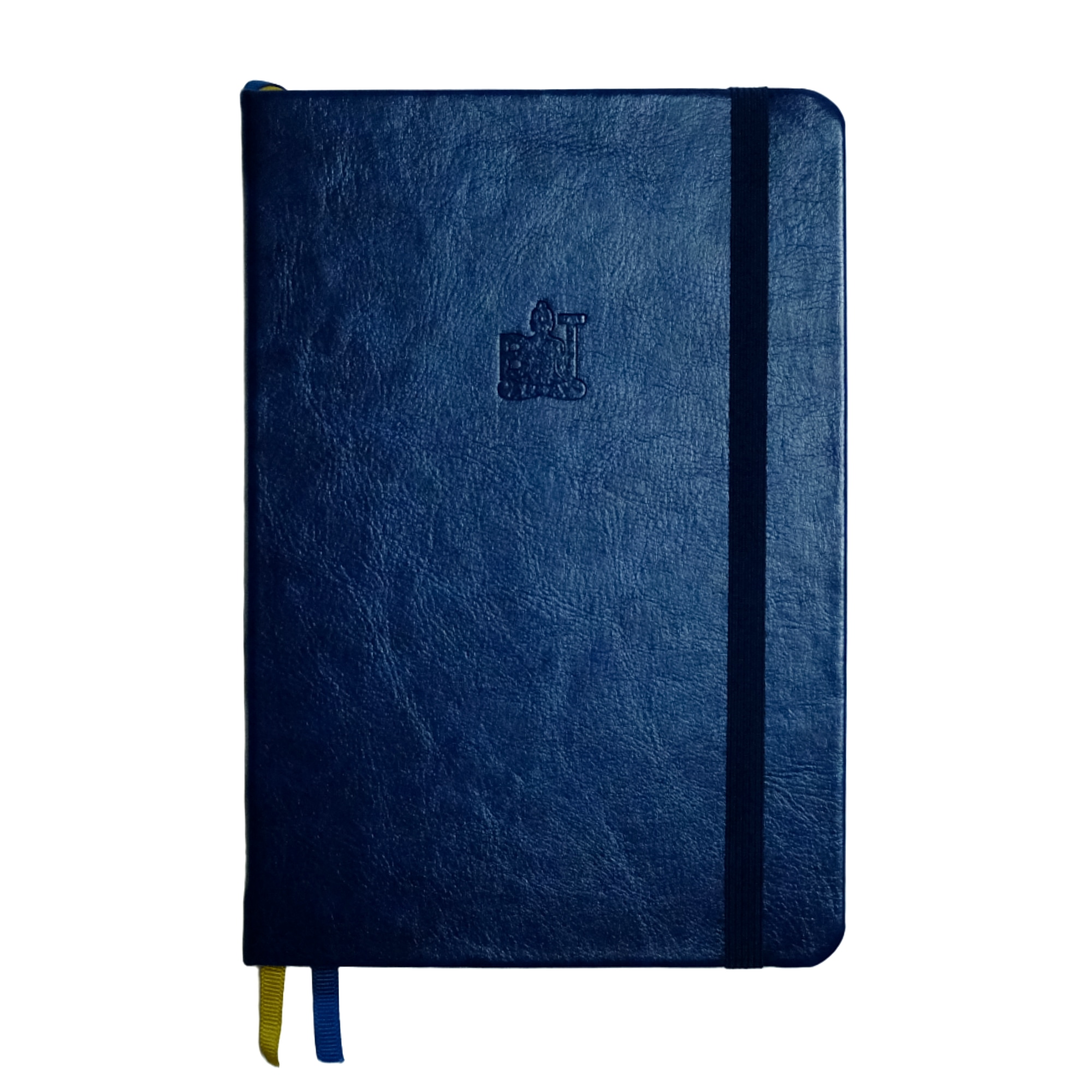
It helps when the questions live inside the notebook you already carry. The Mindful Journal has 50 guided prompts in the back, so you can open to a question whenever the page feels too empty. The rest of its 224 numbered pages stay open for free writing. The 120 GSM acid-free paper handles fountain pens without bleed-through, and a 4 page index at the front lets you note which pages hold the answers you want to find again.
Whichever notebook you use, start with one question. Let the answer be messy. You can always come back to it.
 From the shop
The Mindful Journal
Shop now →
From the shop
The Mindful Journal
Shop now →
Ready to start your practice?
The Mindful Journal gives you 224 pages, 50 guided prompts, and 120 GSM paper that makes every session feel intentional.
View the Journal