Mindfulness Journaling for Beginners: A Complete Guide

Mindfulness journaling is one of those practices that sounds harder than it is. The word "mindfulness" carries a lot of weight - meditation retreats, breath work, people who have clearly figured something out that you have not.
The practice itself is simpler. You sit. You write. You notice what is there. That is it.
This guide is for people who want to start and have not yet, or who have started and stopped multiple times. No gatekeeping. Just what actually works.
What mindfulness journaling is, and what it is not
Mindfulness journaling is the practice of writing with present-moment awareness. You are not planning, not analyzing your past in depth, not writing a to-do list. You are paying attention to what is happening in your mind and body right now, and putting it into words.
It is not:
- A diary of events ("Today I woke up, had coffee, went to work")
- A gratitude list you copy from a template
- Something you have to do for an hour to get the benefits
- Something you have to be good at writing to do
The standard for a good entry is not quality of prose. It is honesty of observation.
What you need to start
A journal and a pen. That is the complete list.
Do not wait for the right notebook. Do not wait until you have built a morning routine. Do not wait until you feel ready, because that feeling does not arrive before the practice. It arrives because of it.
That said, the journal matters more than people admit. A journal that feels good to write in gets used. One that fights you - binding that will not open flat, paper that bleeds through, a cover that feels flimsy - becomes a thing you avoid. If you are going to invest in the practice, invest in the tool.
How to start: the first entry
Open to the first page. Write today's date. Then write this prompt at the top:
"What is present right now?"
Answer it honestly. Not what you think should be present. Not what you wish was present. What is actually there. Maybe it is a low-level anxiety you have been carrying all week. Maybe it is genuine contentment. Maybe it is nothing you can name and that is fine too.
Write until you stop. Put the pen down. That is the first entry. It counts.
Building the habit
Consistency matters more than length. Five minutes every morning is more valuable than an hour once a week. The brain needs repetition to encode a new behavior as automatic.
The simplest system:
- Keep the journal where you wake up
- Write before you check your phone
- Use a prompt when you are stuck
- Do not judge what you write
The phone check can wait three minutes. The writing cannot, because the phone changes your mental state and the moment is gone.
Starter prompts for beginners
These work especially well when you are new and the blank page feels intimidating:
- What is on my mind that I have not said out loud?
- What do I want more of today?
- What would make this week feel meaningful?
- What am I resisting right now and why?
- Who or what am I grateful for in a way I have not fully acknowledged?
You do not need to answer deeply. You just need to answer honestly. One paragraph is enough to start a conversation with yourself.
Common beginner mistakes
Writing what you think you should feel. The practice only works if you write what is actually true. Filtering for acceptability defeats the purpose entirely.
Quitting after missing a day. Missing a day is not failure. It is just a missed day. Open the journal the next morning and write one sentence. The habit survives interruptions. It does not survive the story that missing once means you cannot do it.
Waiting for inspiration. Inspiration comes from writing, not before it. Show up to the page and the words follow. They are never as unavailable as they feel in the moment before you start.
What to expect
In the first week: the practice will feel awkward. This is normal. You are building a new muscle.
After two weeks: the practice will start to feel like a conversation. You will notice things you did not notice before because you were not looking.
After a month: the days when you skip will feel noticeably different from the days when you write. That is the signal that the habit has formed.
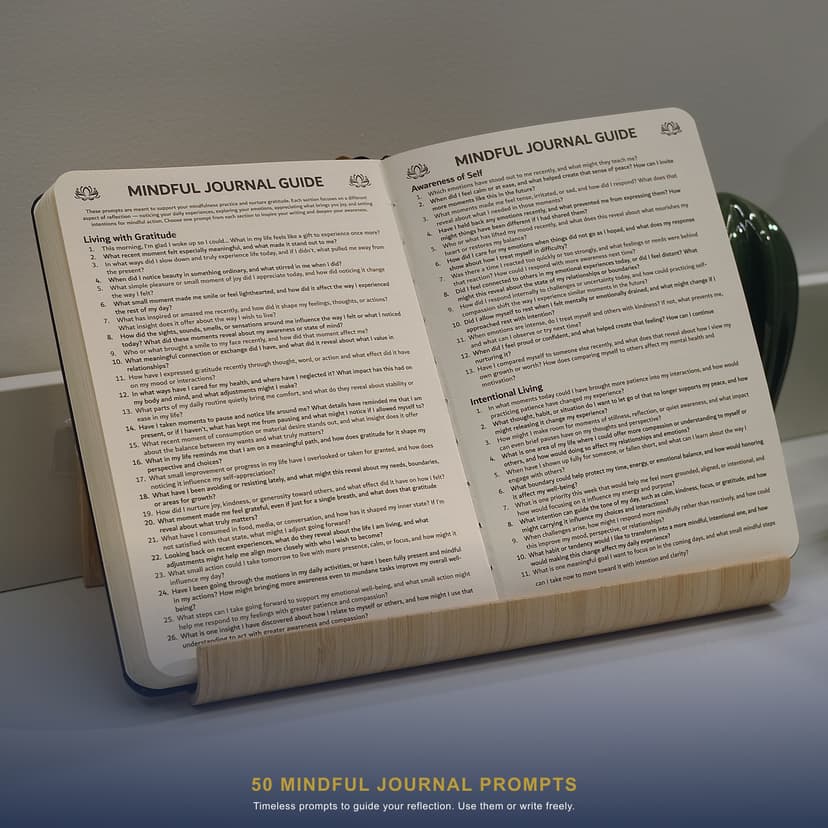
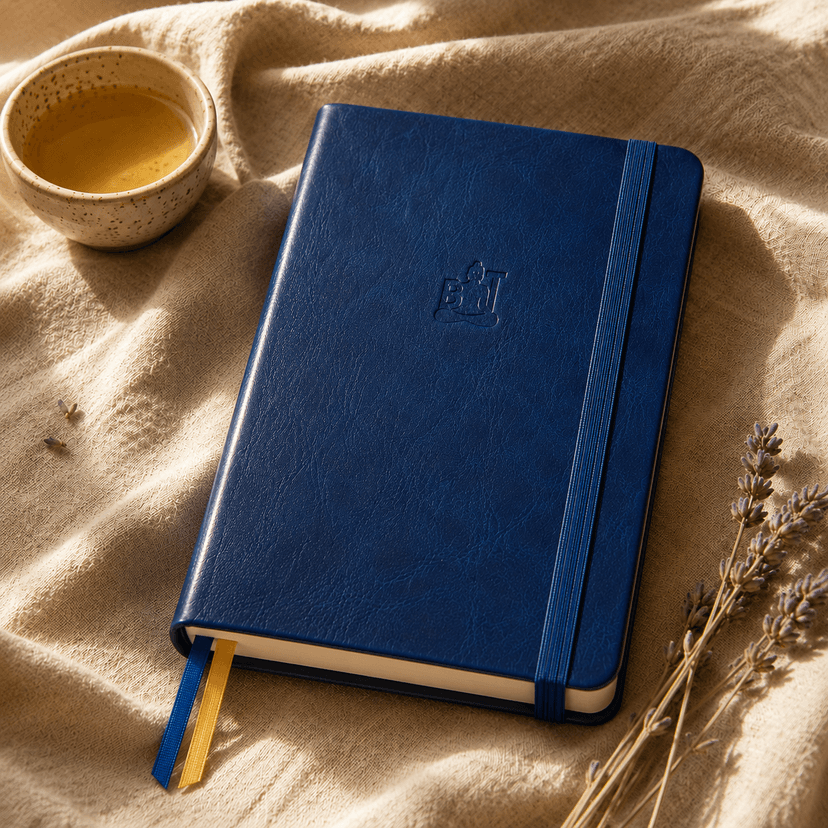
The Mindful Journal was built for exactly this kind of beginning. Fifty guided prompts throughout 224 pages of lay-flat, 120 GSM paper. Enough structure to remove the blank-page paralysis. Enough space to make it yours. It is a good place to start.
Ready to start your practice?
The Mindful Journal gives you 224 pages, 50 guided prompts, and 120 GSM paper that makes every session feel intentional.
View the Journal