What to Write in a Journal When You Feel Overwhelmed
There is a particular cruelty to overwhelm. It is the feeling of having too much to hold, and the journaling advice is to sit down with a blank page and hold even more.
The blank page does not help when you are already at capacity. What helps is structure. A starting point that is small enough to enter.
Here are approaches that actually work when you are overwhelmed, ordered from least to most demanding.
1. The brain dump: no structure, no judgment
The simplest possible starting point. Open the journal, set a timer for five minutes, and write everything that is in your head. Do not organize it. Do not make it readable. Just move it from your mind to the page.
This works because overwhelm is partly a capacity problem. Your working memory is full. The brain dump empties some of the queue. You will not have solved anything, but you will feel slightly less like your head is going to split open. From there, one of the next approaches becomes more accessible.
2. The "one true thing" approach
Write this at the top of the page: "The one thing that is most true right now is..."
Then write just that one thing. Not a list. Not analysis. One true statement about your current experience.
Something happens when you name the thing most clearly. It becomes smaller than when it was floating unnamed. The overwhelm is often not about the volume of problems. It is about the volume of unnamed things competing for attention. One sentence of honesty can shift that significantly.
3. The triage list
Draw a line down the middle of the page. Left column: "Has to happen today." Right column: "Everything else."
Write everything that is overwhelming you into one of those two columns. Nothing goes in the middle.
The left column is almost always shorter than the overwhelm suggests. When you write it out, you can often see that most of what feels urgent is actually in the right column. That does not eliminate the right column, but it makes today more manageable.
4. The body check
Overwhelm lives in the body. Start there instead of with the thoughts.
Write: "Right now, in my body, I notice..." Then describe what you actually feel. Tension in your shoulders. A tightness in your chest. Fatigue behind your eyes. Your jaw clenched. Whatever is physically present.
This grounds you before you try to address anything cognitive. You cannot think your way out of an activated nervous system. But you can notice it, name it, and create a small amount of space between the feeling and the response. Journaling from the body is often more effective than journaling from the to-do list when you are in an overwhelmed state.
5. The letter to tomorrow you
Write a letter to yourself for tomorrow morning. Not advice. Not instructions. Just an honest account of where you are today and what you are hoping tomorrow will hold.
"Today I felt overwhelmed by X and Y. I did not handle Z as well as I wanted to. I am hoping that tomorrow feels a little lighter. Here is what I would like to remember..."
This approach works because it gives the overwhelm a temporal container. You are not writing about this forever. You are writing about today, for tomorrow. There is something clarifying about that frame.
After the overwhelm
None of these approaches will resolve what is overwhelming you. They are tools for creating enough space to breathe and think, not solutions to the underlying problems.
What they do is interrupt the loop. Overwhelm feeds on its own momentum. Writing even a few sentences interrupts that momentum. From a slightly clearer place, next steps become more visible.
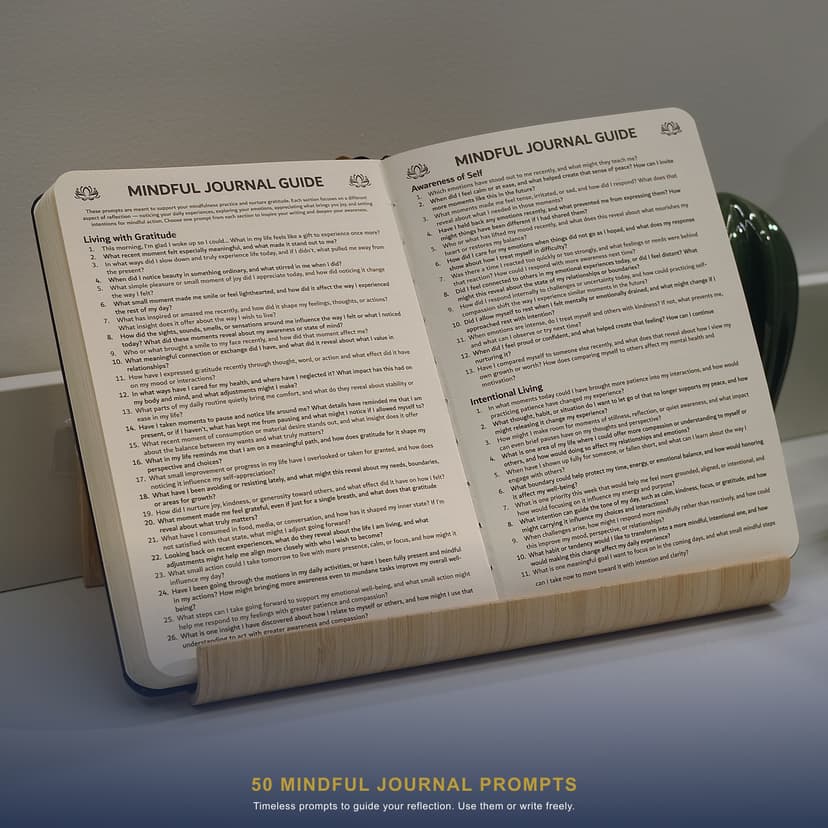
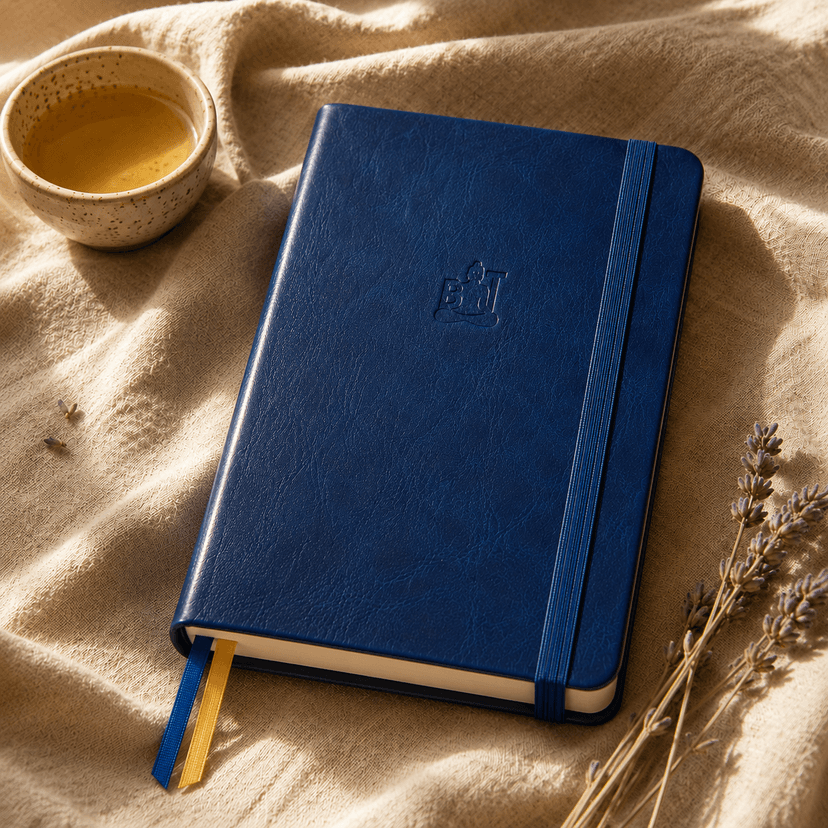
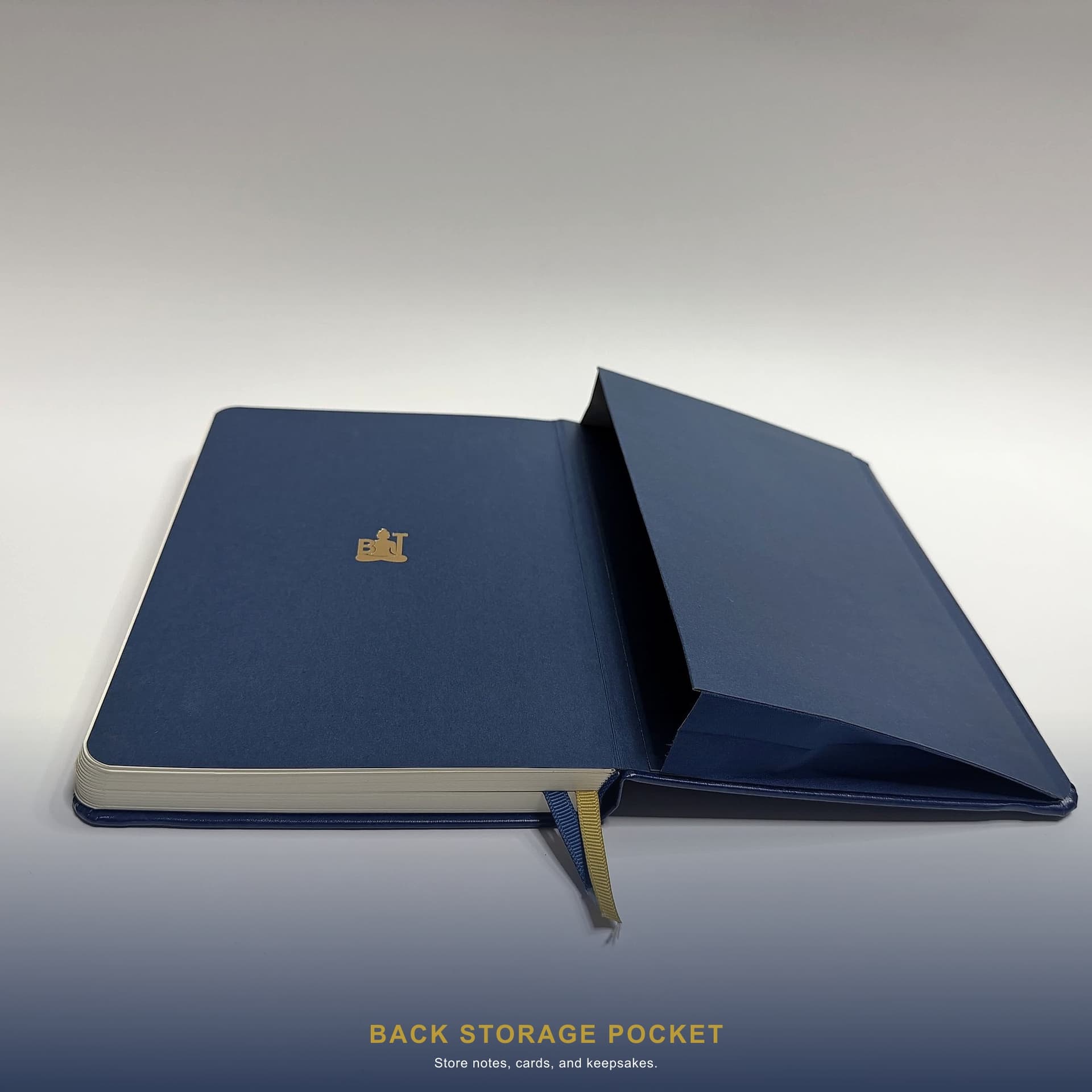
The Mindful Journal includes 50 guided prompts for exactly these moments. When you cannot figure out where to start, the prompt gives you an entry point. The 120 GSM paper holds any pen without complaint. The lay-flat binding keeps the journal open even when you need both hands to hold the day together.
Some days the journal is the practice. Some days it is the emergency exit. Both are valid uses.
Ready to start your practice?
The Mindful Journal gives you 224 pages, 50 guided prompts, and 120 GSM paper that makes every session feel intentional.
View the Journal