Guided Journal vs. Blank Notebook: Which Is Right for You?
Walk into a stationery shop and you will find three kinds of journals. Guided journals full of prompts. Plain blank notebooks. And dotted-grid notebooks built for the bullet journal method. Each has loyal fans, and each has people who tried it once and gave up.
There is no best option. There is only the one that matches how you actually write. Here is a fair look at all three, who each suits, and a fourth path that borrows from them.
Guided journals
A guided journal comes with structure built in. That might be a prompt at the top of each page, a daily template, or sections for gratitude, goals, and reflection.
Where they shine:
- They remove the blank page problem. You always know what to write about.
- They teach technique. If you are new to journaling, the questions show you what reflective writing can look like.
- They support consistency. A familiar layout makes a daily habit easier to repeat.
Where they can fall short:
- Fixed prompts may not match your day. Being asked about gratitude on a day when you need to vent can feel off.
- Pre-printed boxes and fields can feel like homework. An unfilled section may leave you with a nagging sense of falling behind.
- Limited room. Some days you have three pages to write, and the layout allows one paragraph.
Blank notebooks
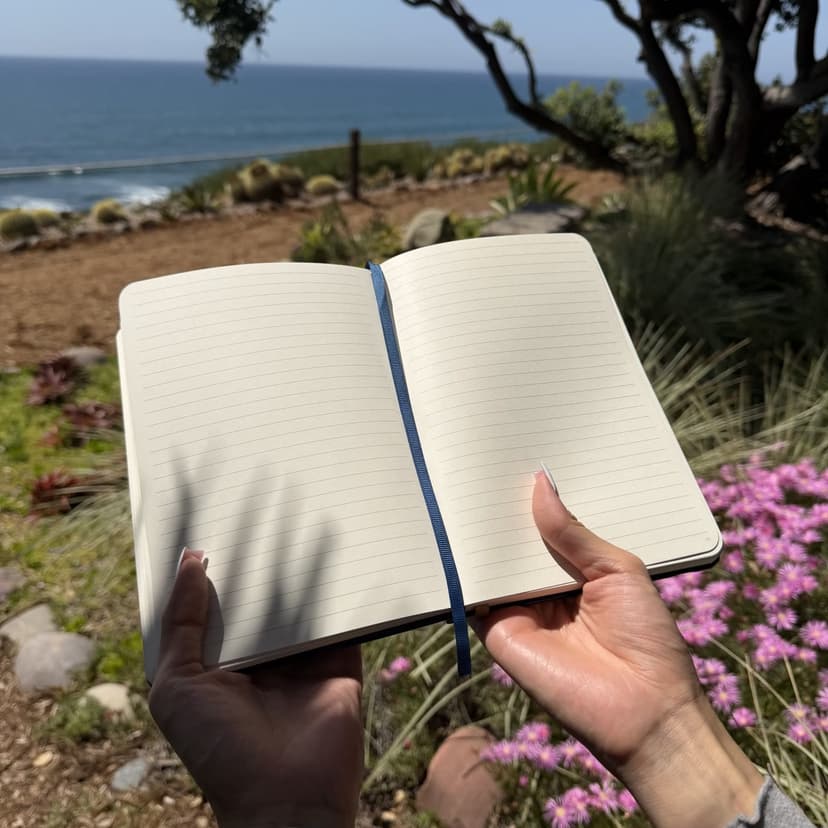
A blank notebook is the oldest format there is. Plain, ruled, or unlined pages, and nothing else.
Where they shine:
- Total freedom. Write a list, a letter, a sketch, or a single line.
- No pressure. There are no sections to complete and no schedule to keep.
- Flexibility across uses. The same notebook can hold reflections, plans, and loose thoughts.
Where they can fall short:
- The blank page problem is real. Many people stall before the first sentence.
- Every session starts with decisions: what to write, how to lay it out, where to begin.
- Without structure, it can be harder to build a regular habit or to find an old entry later.
Bullet journals
The bullet journal is a method more than a product. It usually starts with a dotted or grid notebook, then adds numbered pages, an index, short bullet-style entries, and collections for lists and trackers.
Where they shine:
- Excellent for planning. Tasks, calendars, habit trackers, and project lists live in one place.
- Highly customizable. You design the layouts that fit your life.
- The index and numbered pages make everything findable.
Where they can fall short:
- Setup takes time. Some people enjoy it, and others find it becomes a design project that crowds out writing.
- The format leans toward logging tasks and events. Slower, reflective writing can get less space.
- Elaborate spreads can create pressure to keep everything tidy.
Who each one suits
- Choose a guided journal if you are new to journaling, you freeze at a blank page, or you like clear direction and a predictable routine.
- Choose a blank notebook if you already write easily, you like to think on your own terms, or you want one notebook for everything.
- Choose a bullet journal if you want to organize your days, enjoy creating layouts, and see journaling as one part of a larger planning system.
Many people move between these over time. Someone might start with a guided journal to learn what they like, switch to blank pages once the habit is solid, and add a few bullet-style lists along the way. That is a perfectly normal path.
The hybrid option
There is a fourth approach: a notebook that is mostly open pages, with guidance available when you want it. Prompts that sit in their own section, so you can use them on a stuck day and ignore them on an easy one.
If you are considering a hybrid, look for a few things:
- Prompts kept separate from the main pages, so the body of the notebook stays open for free writing.
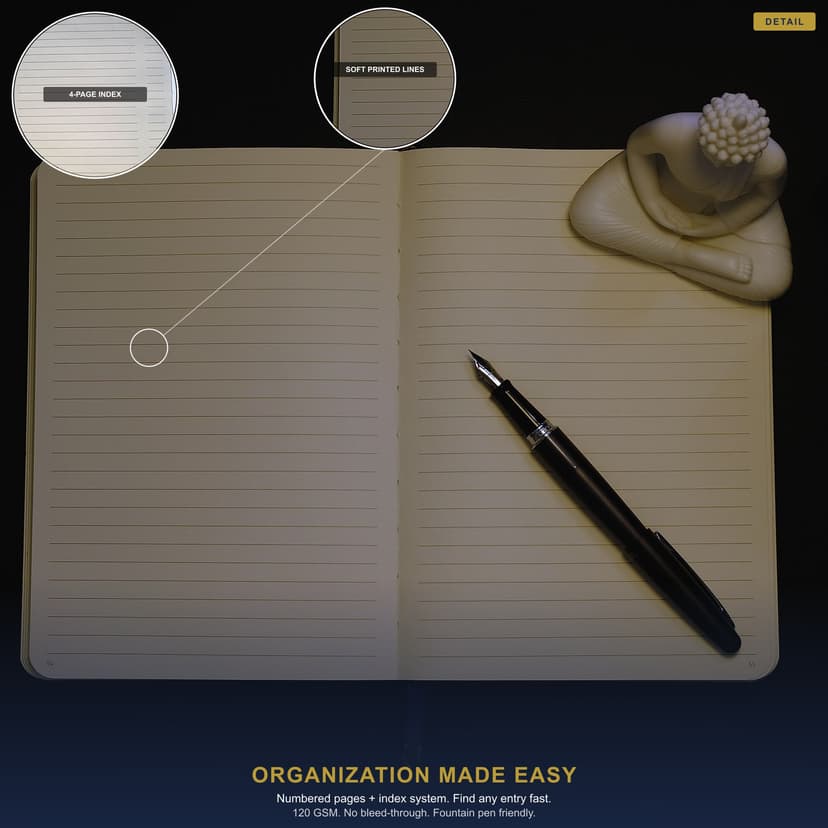
- Numbered pages and an index, borrowed from the bullet journal method, so you can find entries later.
- Paper that handles any pen, since you may switch between a ballpoint and a fountain pen as your habits change.
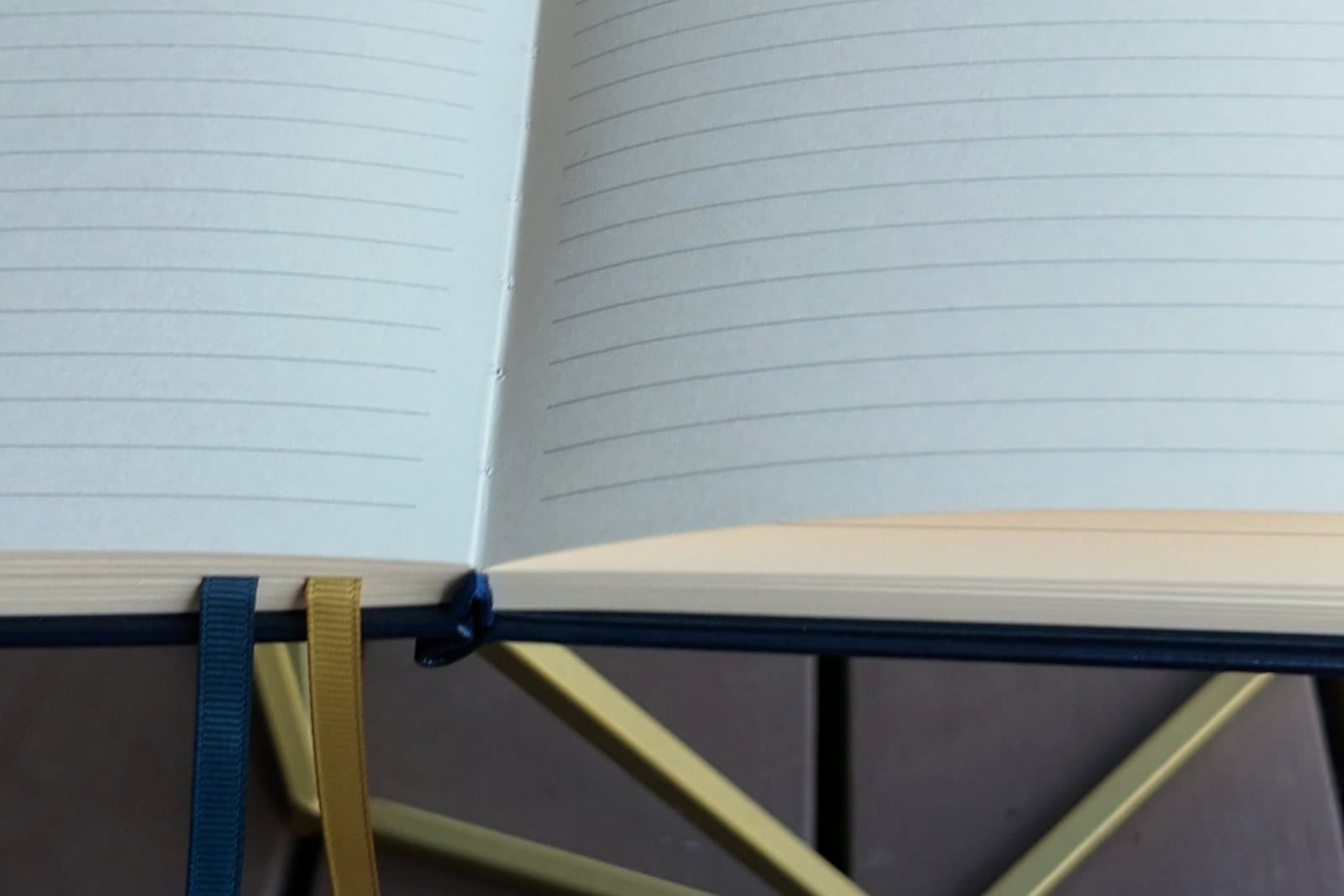
- A binding that opens flat, which matters more than it sounds when you write for twenty minutes at a time. Our guide to what a lay-flat journal is explains why.
Three questions to help you choose
- What happens when you open a notebook and have nothing to say? If the answer is "I close it," lean toward guidance. If the answer is "I start writing about nothing and find something," lean toward blank pages.
- What do you want the journal to do? Reflection, planning, memory keeping, and creative work all call for slightly different tools.
- How do you feel about rules? If structure comforts you, pick it. If structure makes you rebel, give yourself room.
If you are still unsure, run a two-week test. Write in whichever format you own for ten days and notice where you struggled. The friction tells you what the next notebook should fix. For a deeper checklist on materials and build quality, see how to choose a journal: what actually matters.
Where The Mindful Journal fits
The Mindful Journal was designed as a hybrid. Most of its 224 numbered pages are open for whatever you want to write, and 50 guided prompts wait in the back for the days when you need a starting point. A 4 page index at the front borrows the best idea from bullet journaling: you can note where each topic lives and find it again. The 120 GSM acid-free paper takes fountain pens without bleed-through, and the Smyth sewn hardcover binding lies flat on the desk.
Guided when you want it. Open when you do not. That is the entire idea.
 From the shop
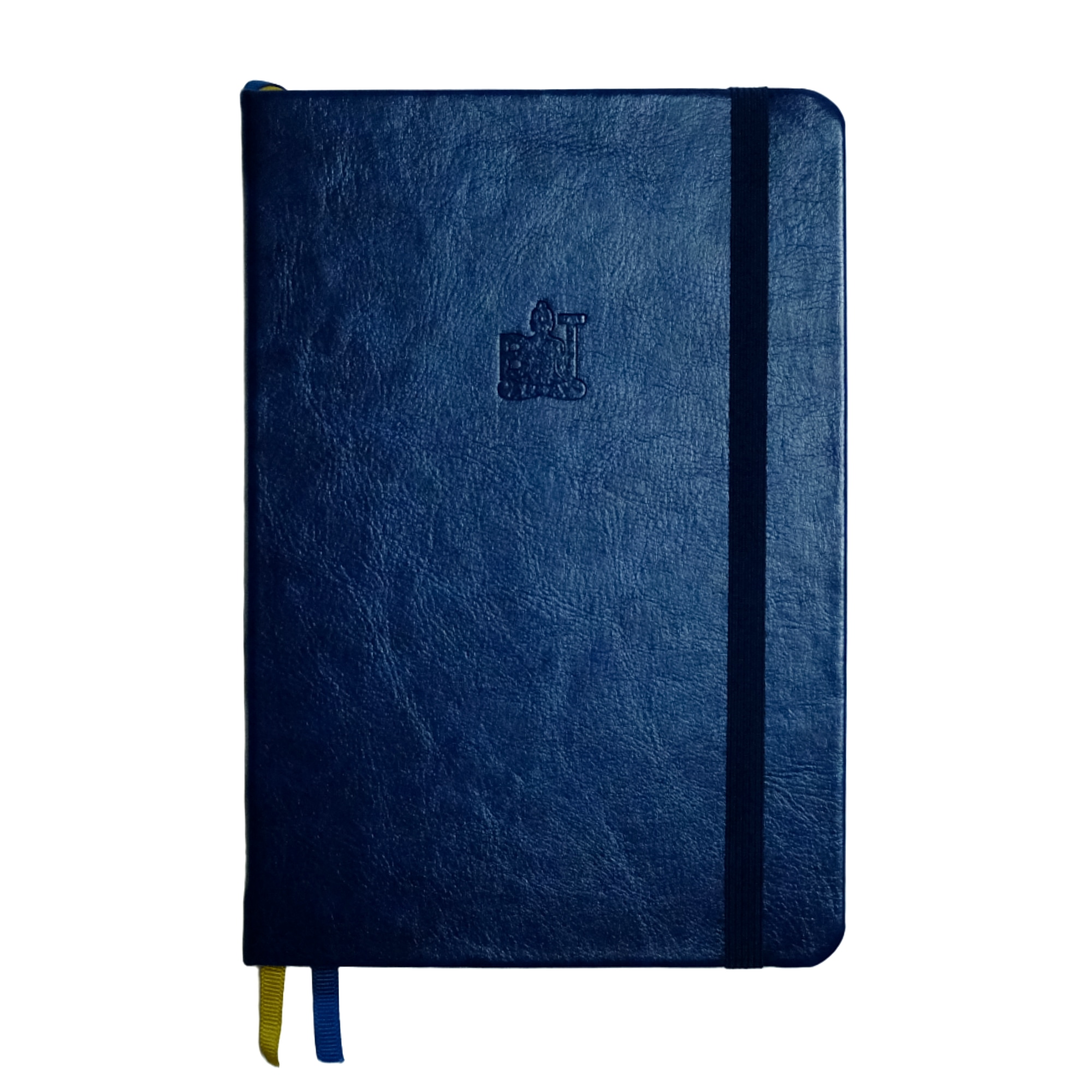
The Mindful Journal
Shop now →
From the shop
The Mindful Journal
Shop now →
Ready to start your practice?
The Mindful Journal gives you 224 pages, 50 guided prompts, and 120 GSM paper that makes every session feel intentional.
View the Journal