Journaling for Anxiety: Does It Actually Work?
Journaling for anxiety is often described in soft, vague terms. "Create space for your feelings." "Process your emotions." "Release what no longer serves you."
If you are anxious, that kind of language is not helpful. You want to know: does this actually work, and if so, how?
What the research says
There is solid evidence that expressive writing reduces anxiety. A 2018 meta-analysis published in Clinical Psychology Review examined dozens of studies on writing-based interventions and found consistent reductions in anxiety symptoms, particularly for people with generalized anxiety.
The mechanism is not mystical. Anxiety is partly a problem of unprocessed thought loops. When the same worry circulates in your head without resolution, it does not get resolved. It amplifies. Writing interrupts that loop. It forces the thought into a linear format, which engages the prefrontal cortex and reduces the amygdala's grip on the narrative.
In plain terms: getting the thought out of your head and onto the page reduces its emotional charge.
What type of journaling helps with anxiety
Not all journaling is equally effective. Research distinguishes between:
Expressive writing - writing freely about your thoughts and feelings without editing or structure. This is the most studied form and shows the strongest results for anxiety reduction.
Worry journaling - writing down specific worries and then writing a counter-response. Effective for anxious thought patterns, especially before bed.
Gratitude journaling - writing specific things you are grateful for. Less effective for acute anxiety, but builds a positive baseline over time.
Structured prompts - guided questions that move you from a feeling to a reflection. Particularly useful if unstructured writing makes anxiety worse because the blank page feels overwhelming.
What does not work
Pure venting does not help. Writing "I am so anxious and I do not know why and everything feels impossible" five times does not move anything forward. Research shows that writing without any reflective component can actually reinforce negative patterns rather than resolve them.
The key is to move from the feeling to some form of observation or reframe, even a small one. "I notice I am feeling anxious about the meeting tomorrow. What specifically am I afraid will happen? What is actually in my control?"
A simple framework for anxiety journaling
You do not need a complicated system. This works:
- Name the feeling - "Right now I feel anxious about..."
- Externalize the specific worry - write it out completely, not in summary
- Ask one question - "What is actually in my control here?" or "What would I tell a friend who felt this way?"
- Write one small next action - even if it is just "go to sleep and revisit this tomorrow"
That is five to ten minutes. It is not going to cure clinical anxiety disorder, and it is not supposed to. It is a tool that reduces the noise so you can function more clearly.
When to journal for anxiety
The most effective time is when the anxiety is present, not after. If you find yourself ruminating at night, keep the journal on the nightstand. Write before you pick up your phone. If you are anxious in the morning, write before you check messages.
The worst time is after you have already spent an hour on your phone, because by then the anxiety has a full stack of additional inputs to feed on.
Starting is the hardest part
The irony of anxiety journaling is that anxiety is exactly what makes it hard to start. The blank page can feel like another thing to do wrong.
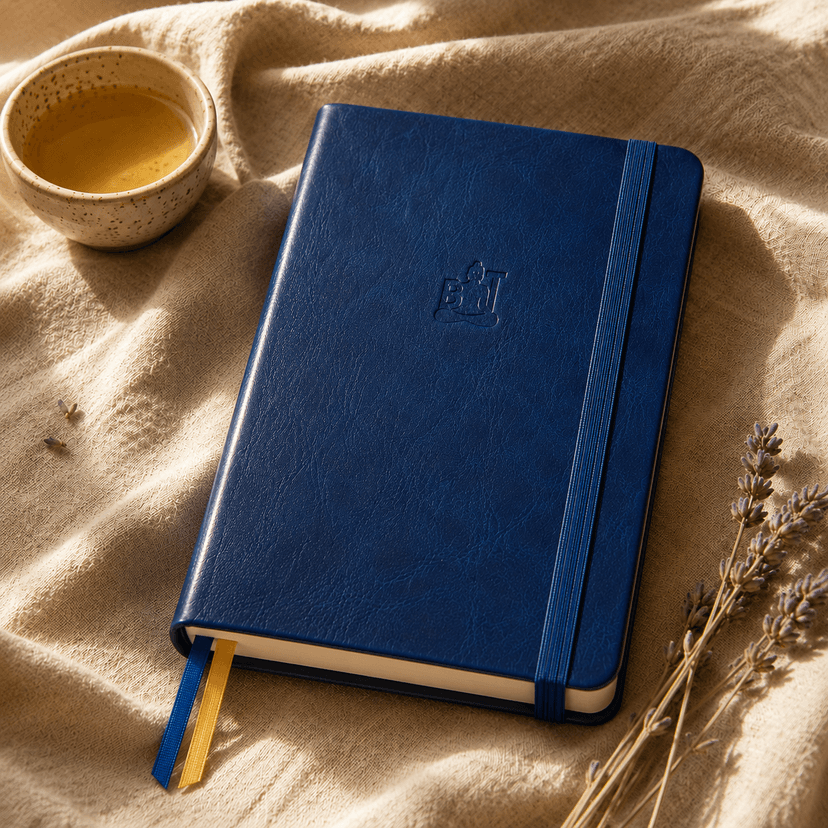
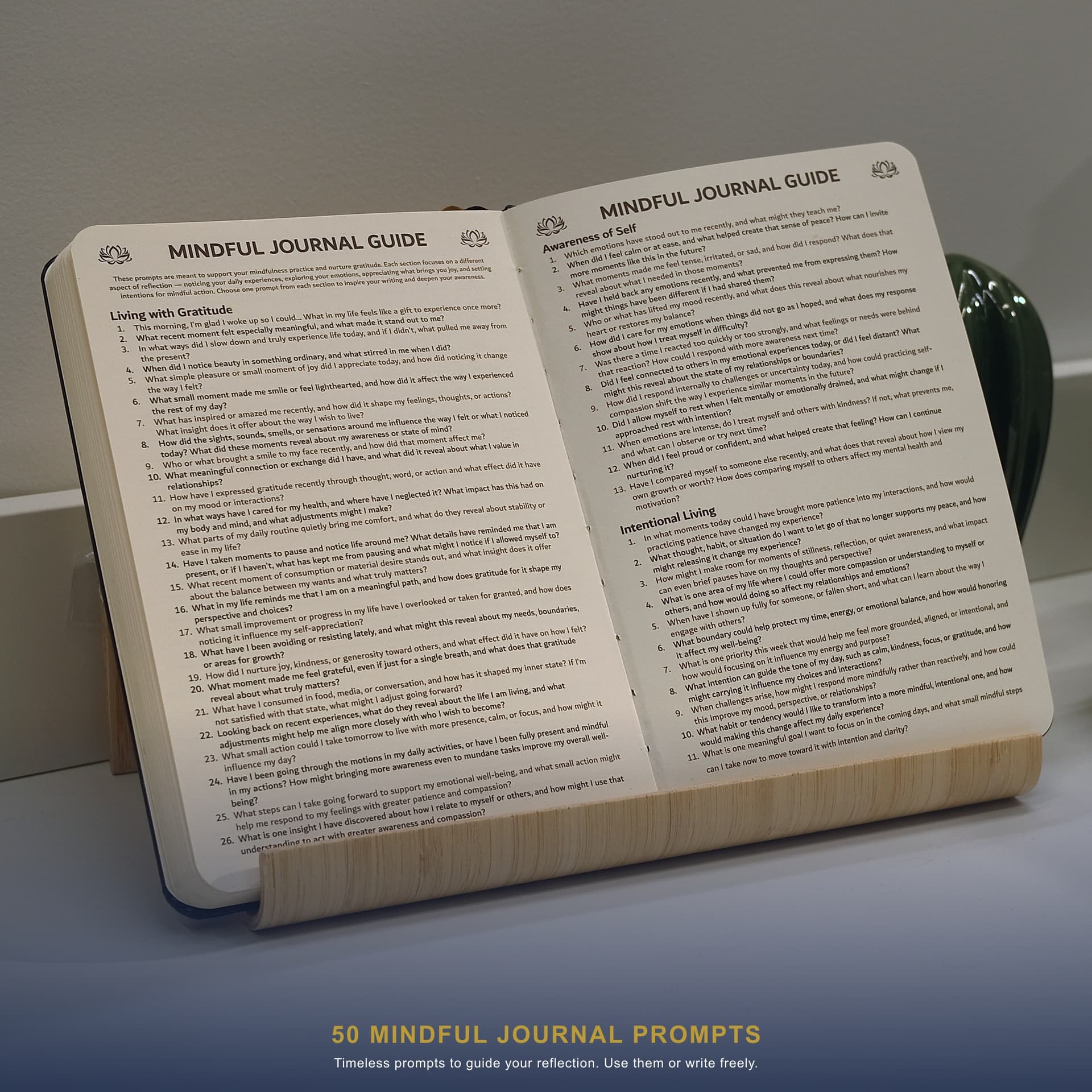
That is why guided prompts exist. You do not have to generate the question. You just have to answer it. The Mindful Journal includes 50 prompts designed for exactly this kind of reflection, spread across 224 pages of thick, bleed-proof paper. It is a journal built to remove friction from the practice, not add to it.
If writing has not worked for you before, the problem may not have been the writing. It may have been the structure, or the lack of it. Start with a prompt. Write for five minutes. See what surfaces.
Ready to start your practice?
The Mindful Journal gives you 224 pages, 50 guided prompts, and 120 GSM paper that makes every session feel intentional.
View the Journal