How to Make a Hard Decision by Journaling

A hard decision has a way of living in your head rent-free. You weigh it on the commute, in the shower, at two in the morning. The same arguments circle, and none of them lands.
Writing breaks the loop. On paper, thoughts have to stand in a line. You can see what you actually said, notice what you keep repeating, and spot the gaps. Here is a six-step written process for any decision that deserves more than a quick gut call. It takes under an hour of writing, spread across two days.
Step 1: Name the decision
Vague decisions stay stuck. "What should I do about work?" has no answer. "Should I accept the new role or stay where I am through the end of the year?" does.
Exercise: Write the decision as a single question with two clear options. Then write it two more ways. Read all three and circle the one that sounds most honest. Often the real question is hiding in the third version.
Finish the step by writing a deadline. "I will decide by Friday" turns a worry into a task. If the real deadline is outside your control, write that too.
Step 2: Separate fear from facts
Fear is skilled at dressing up as information. "That will never work" sounds like a fact. It is a prediction.
Exercise: Draw a line down the middle of a page. Label the left side Facts and the right side Fears. A fact is something you could check: a number, a date, a thing someone said. A fear is a story about what might happen.
Then take each fear and ask two questions:
- How likely is this, honestly?
- If it happened, what would I do next?
Fears usually shrink once they come with a plan. Some will remain, and that is useful too. If your head is too crowded to sort anything, start with a quick brain dump, like the ones in what to write when you feel overwhelmed, and come back to this step.
Step 3: Write both futures
Pros and cons lists flatten a decision into numbers. Stories bring in what a list leaves out.
Exercise: On one page, write about Option A. Set the scene one year from now, and describe an ordinary Tuesday in the present tense. Where do you wake up? What is the first hour like? What are you working on? Who are you talking to? What are you proud of, and what do you miss?
On a second page, do the same for Option B.
When you finish, read both and notice how each felt to write. Which one flowed? Which one did you rush through or fill with qualifiers? Neither reaction is a verdict, but both are information worth having.
Step 4: Run the values test
Many hard decisions are hard because two good things pull in different directions. A values test makes the trade visible.
Exercise:
- List the three to five values that matter most to you right now. Examples: security, freedom, family, growth, creativity, health, adventure.
- Make a small table with your values down the side and your two options across the top.
- For each value, mark each option as supports, neutral, or works against.
Do not tally points. Look instead for any place where an option works against a value you are not willing to give up. That single mark often outweighs a column of small pluses.
Step 5: Sleep on it
This step sounds too simple to matter, and it is the one most people skip. Close the journal. Do not decide tonight.
Before bed, write one line at the bottom of the page: "Tomorrow I will read this again." Then leave it alone.
The next morning, read what you wrote with fresh eyes. Add a short paragraph answering: What stands out now? What feels different? What did I leave out? A night away often changes how a page reads. If your answer is the same, you have more confidence in it. If it shifted, you have learned something.
Step 6: Decide, and write it down
Now make the call. Write one clear sentence: "I am choosing..." Then add three short lines:
- The main reasons for my choice.
- The first step I will take, and when.
- What I will do if this turns out to be harder than I expected.
Date it. A written decision is easier to commit to, and it gives you something to return to later.
If you still cannot decide
Sometimes the process shows that you are missing a piece of information. If so, write down exactly what you need to know, who could tell you, and by when. That is a decision too: you have decided to gather, with a deadline.
Another quick check: assign each option a side of a coin, then flip it. Before you look, notice which side you were hoping for. You do not have to follow the coin. You only need to notice your reaction.
Review the decision later
A month or two after you decide, return to the page. What did you predict? What actually happened? This loop teaches you how your own judgment works over time, which makes the next hard choice easier. Our guide on how to look back on old journal entries shows a simple way to do this review.
Tools that help with a long decision
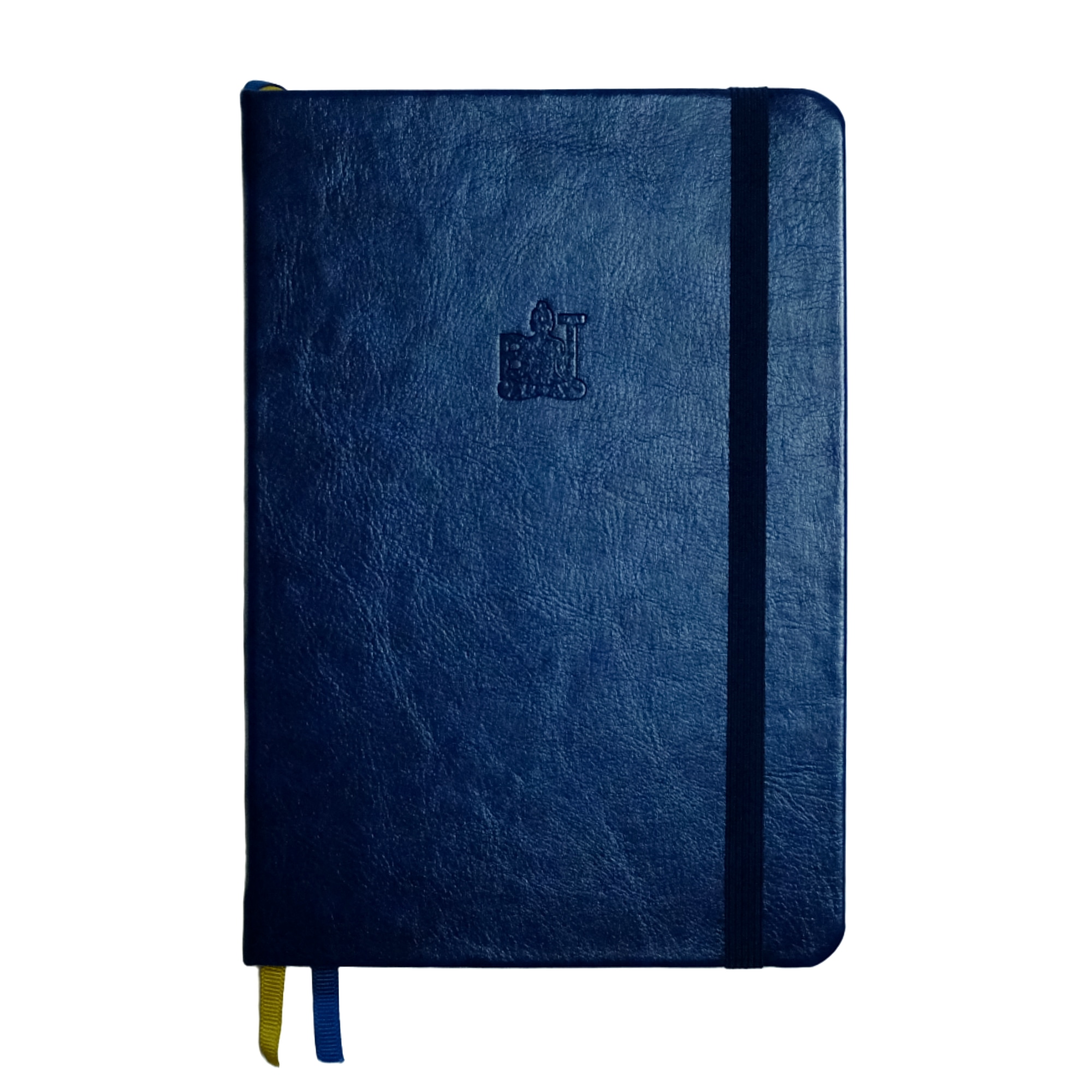
A decision spread over two days benefits from a notebook that stays organized. The Mindful Journal has numbered pages and a 4 page index at the front, so you can log "the move decision, pages 88 to 94" and find it in seconds. Two ribbon bookmarks are handy here: one can hold Option A, the other Option B. The lay-flat binding gives you room to write two-column lists without wrestling the spine, and the 50 guided prompts in the back can help when you are unsure how to begin.
A clear decision rarely arrives as a flash. It usually shows up the way a photograph develops, slowly and then all at once. Give it the page and the time.
 From the shop
The Mindful Journal
Shop now →
From the shop
The Mindful Journal
Shop now →
Ready to start your practice?
The Mindful Journal gives you 224 pages, 50 guided prompts, and 120 GSM paper that makes every session feel intentional.
View the Journal