How to Look Back on Old Journal Entries (and Why You Should)
Most people treat a journal as a one-way street. Write the entry, close the cover, move on. The pages pile up, and nobody opens them again.
That is a missed opportunity. Writing is the first half of journaling. Rereading is the second half, and it is where a lot of the value lives. Here is why it matters, how often to do it, and a simple ritual that makes it feel easy.
Why rereading matters
Memory is a generous editor. It smooths over rough patches, shrinks old worries, and reshapes the story of how things went. Your journal keeps the original draft: what you actually thought, on the day you thought it.
Reading it back can show you things that are nearly impossible to see in real time.
- Patterns. The same worry showing up in March, June, and October. The same kind of day leaving you drained. The same small thing reliably lifting your mood.
- Growth. A problem that filled three pages last spring and barely registers now. Evidence that you handled more than you remember.
- Forgotten good moments. Small joys and kind exchanges that slipped out of memory. If you keep a gratitude practice, these are a gift to rediscover. Our post on gratitude journaling covers how to build that habit.
- Advice you already gave yourself. Many people find they wrote exactly what they needed to hear months ago, then forgot it.
How often should you look back?
There is no single right schedule, but a layered approach works well.
- Weekly, five minutes (optional). Flip through the last seven days. Notice one thing.
- Monthly, 20 to 30 minutes. This is the core ritual. Long enough to see a pattern, short enough to keep up.
- Quarterly, 45 to 60 minutes. Step back further. Read your monthly summaries and look at the bigger arc.
- Yearly, one long sitting. Read the whole year. Many people choose a quiet week near the end of the year.
If that sounds like a lot, start with monthly only. A single reliable review is better than a grand plan you drop in week two. If you struggle to keep any journaling routine going, our guide to sticking with journaling can help.
A simple monthly review ritual
Pick a calm time and a comfortable spot. A cup of tea helps. Then work through these steps.
- Set the scene. Block 30 minutes. Silence your phone. Have a pen and a few sticky notes or a pencil ready.
- Read without editing. Start at the first entry of the month and read to the end. Resist the urge to fix, judge, or rewrite. You are only the reader.
- Mark what stands out. Lightly underline lines that surprise you, move you, or repeat. Use a ribbon or sticky note to flag a few pages you want to revisit.
- Answer three questions. On a fresh page, write short answers to these: What came up again and again? What changed this month? What am I ready to let go of?
- Write a one-paragraph summary. Capture the month the way you would explain it to a friend. This summary is what you will read in the quarterly review.
- Choose one thing to carry forward. A habit to keep, a question to explore, a small change to try. One thing only.
For the quarterly review, skip the daily entries. Read only your monthly summaries and notes. Look for the thread that runs through all three. Then write yourself a short letter about what you noticed and what you want the next three months to hold.
Read with kindness
Rereading can sting. You may wince at an old entry, or recognize a worry you have now outgrown, or see a choice you would make differently today. That is normal.
Read your past self the way you would read a friend's diary: with patience, and with respect for what they were dealing with at the time. They were doing their best with what they knew. The goal of the review is to learn from your own record, not to grade it.
One more tip: if a decision shows up in the pages, compare what you predicted with what actually happened. It is a quiet way to learn how your own judgment works. We cover this in how to make a hard decision by journaling.
Make it easy with numbered pages and an index
The hardest part of looking back is finding things. If you have to flip through 100 pages to find an entry, the review stops being pleasant and starts being work.
Two simple tools fix this:
- Numbered pages. When every page has a number, you can refer to any entry precisely. "See page 61" beats "somewhere in the spring."
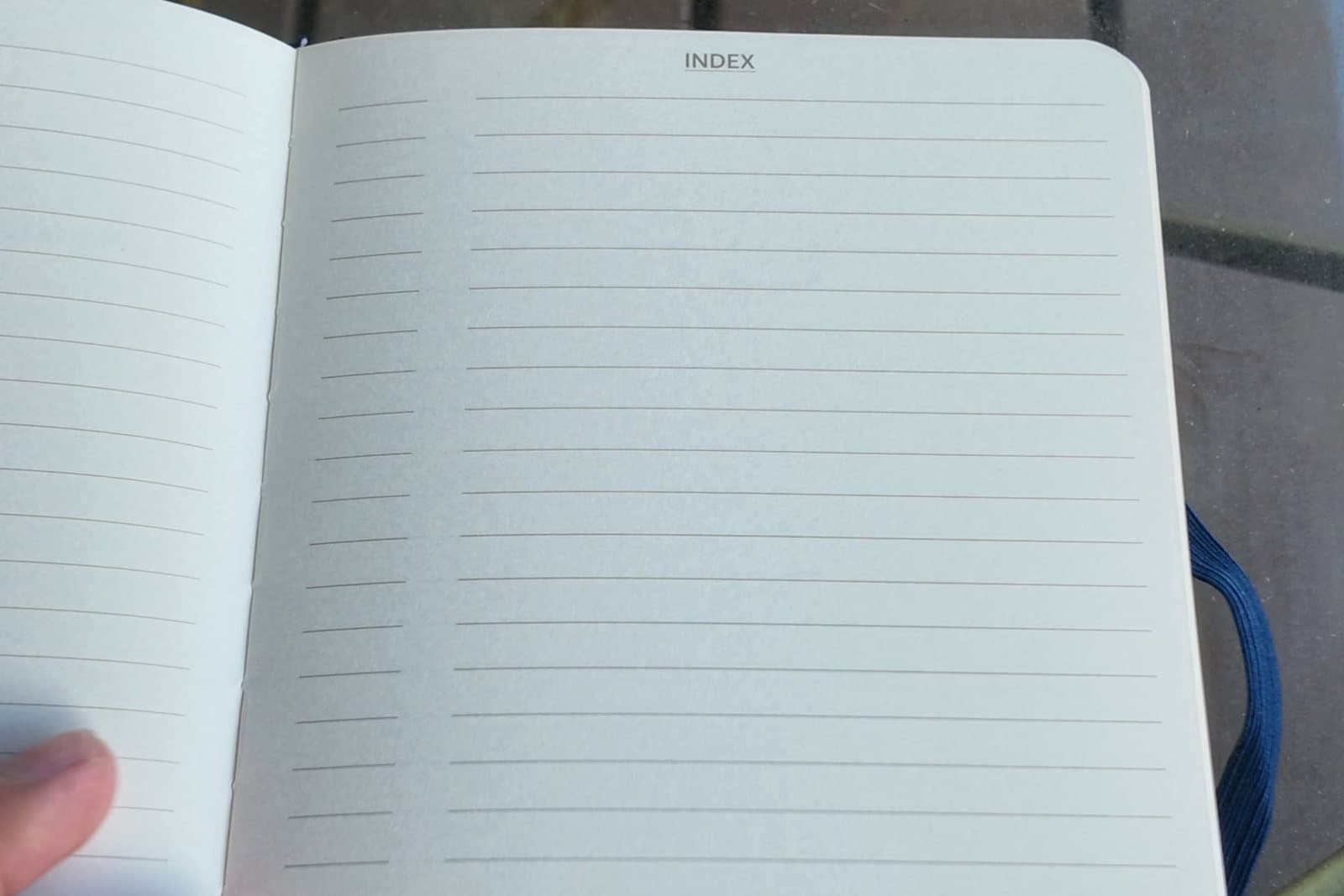
- An index. Keep a running list at the front of the notebook. After each entry or each week, add a line: the topic and the page number. "Sleep experiments, 34." "Moving plans, 51 to 56." Over time, it becomes a map of your own thinking.
A few minutes of indexing now saves a lot of hunting later, and it makes the monthly review far more inviting.
A notebook designed to be reread
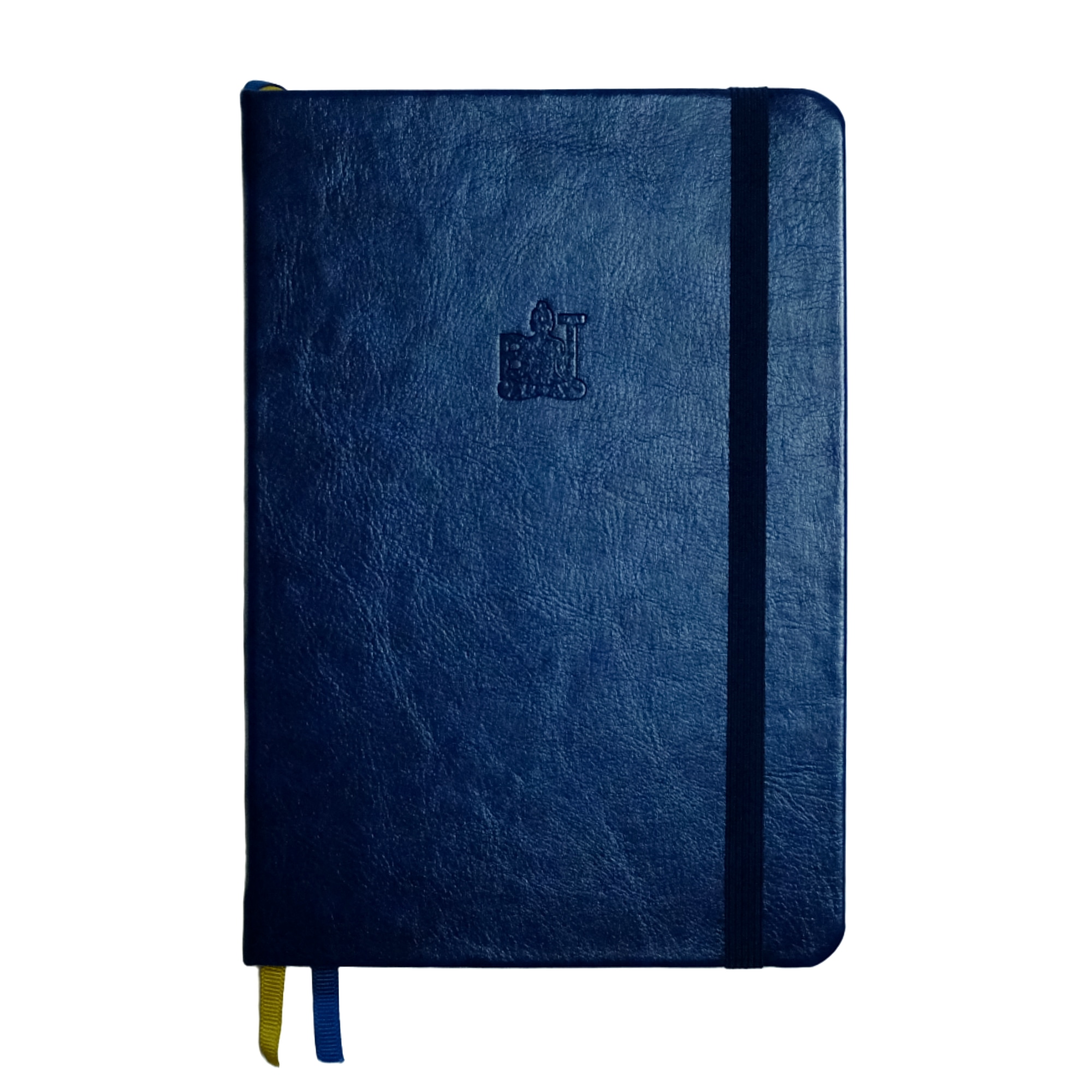
The Mindful Journal was built with this in mind. All 224 pages are numbered, and a 4 page index sits at the front so you can log topics as you go. Two ribbon bookmarks let you hold two places at once, which is handy when you are comparing last month with this one. The 120 GSM acid-free paper handles any pen, and the lay-flat Smyth sewn binding stays open while you read and take notes.
Your journal is a long conversation with yourself. Take time to listen to the earlier parts.
 From the shop
The Mindful Journal
Shop now →
From the shop
The Mindful Journal
Shop now →
Ready to start your practice?
The Mindful Journal gives you 224 pages, 50 guided prompts, and 120 GSM paper that makes every session feel intentional.
View the Journal